Estate Planning · Protective Wealth Advisors
Your Estate Plan Is Probably Wearing Acid-Washed Jeans
It made sense when you bought it. Then time kept moving.
By Rich Ison • Protective Wealth Advisors · June 8, 2026
I want you to picture the last time you updated your estate documents.
Got it? Okay. Now picture what was happening in your life back then. Who was president. What your kids were doing. Whether you still had that dog. For a lot of folks who sit down with our team, the honest answer is something like, “We did it right after Brandon was born.” Brandon is now thirty-one. Brandon has his own Brandon.
Here's the thing nobody tells you about estate planning: it is not a crockpot. You don't set it and forget it. You set it, and then life keeps happening to it.
And look — if “set it and forget it” hit a little close to home, you're not alone. It's exactly how most people treat their 401(k), too. You picked a few funds back when you started the job, half-understood the options, checked a box, and... that was it. One of the single most important pieces of your financial future, quietly running on autopilot based on a decision you made years ago and haven't looked at since.
When you signed those documents, they were a perfect snapshot of your life on that day. The problem is that the snapshot doesn't age with you. It just sits in a drawer, or a fireproof box, or — my personal favorite — “somewhere, I think the attorney has it?”, quietly becoming less and less true every year.

Life changes fast... and your estate plan has to change with it, just as fast.
And the world around those documents has changed too. The tax laws moved. The exemption amounts moved. Your accounts moved — you opened new ones, rolled over old ones, named a beneficiary in 2009 that you have completely forgotten about. It's an ex-spouse for a shocking number of people. I'm not naming names. The beneficiary form is, though.

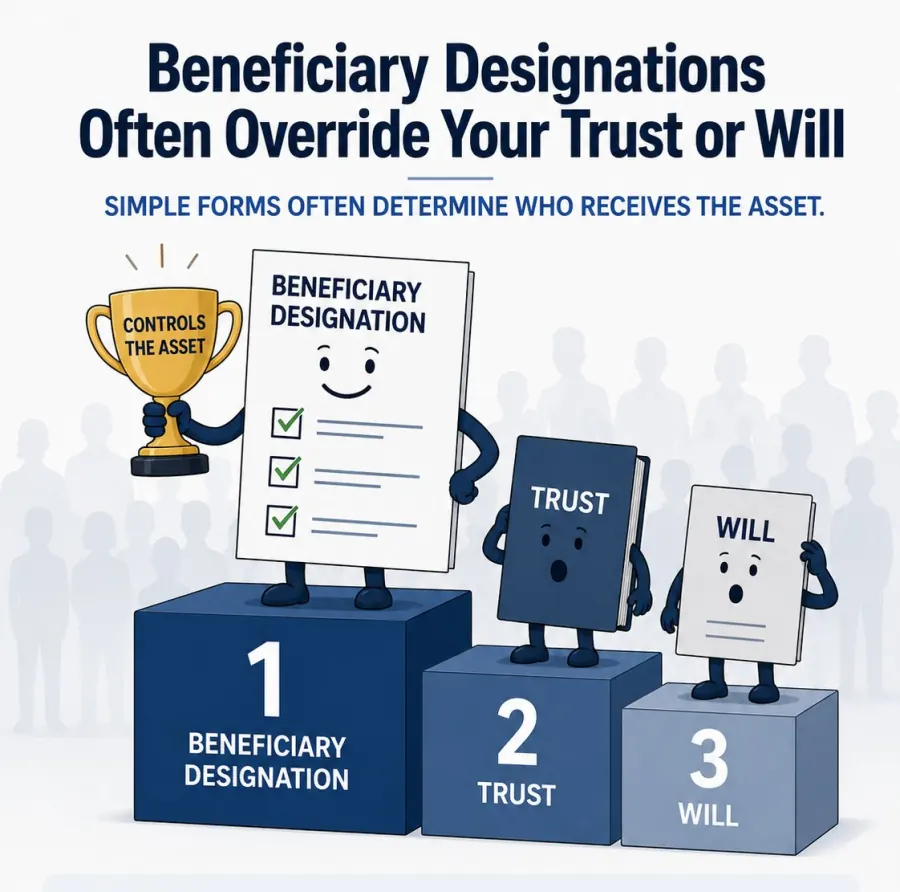
Your beneficiary designations beat your will
This is the part that surprises people the most, so let me say it plainly: your beneficiary designations beat your will. If your will says one thing and your old 401(k) form says another, the form wins. Doesn't matter what the will says. Doesn't matter what you meant. The form wins. That little piece of paper you filled out in a hurry during onboarding has more power than the expensive document you signed in an attorney's office.
So why doesn't everybody just keep these things current?
Because updating estate documents used to be genuinely annoying. Call the attorney. Make the appointment. Drive over. Pay the hourly rate to change one line. Most people did the math on that hassle and decided their slightly-out-of-date plan was “probably fine.” It's usually not fine. But I understand the impulse.
The good news is that part has actually gotten better. Modern estate planning platforms — the kind our team uses, like Wealth.com — are built around the idea that your plan is a living thing, not a stone tablet. You can see everything in one place, keep it current as life changes, and stop playing hide-and-seek with documents you signed during a different decade.
But — and this is the part I really want you to hear — keeping the documents current is step one, not the finish line.
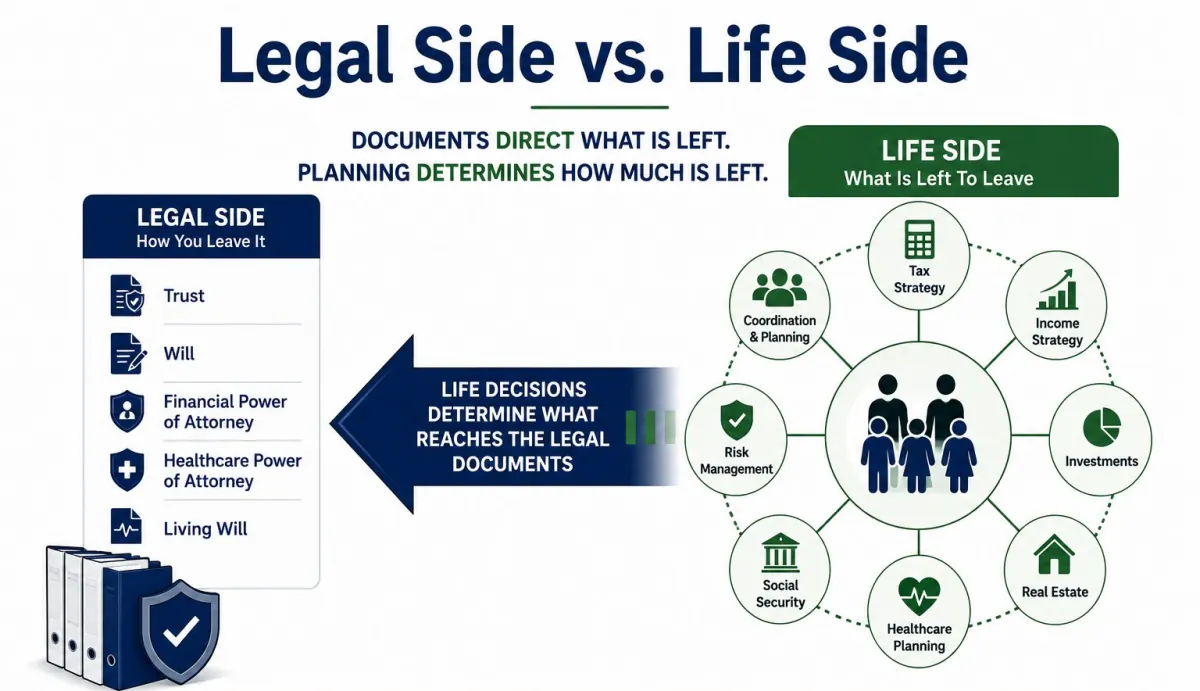
Your legal documents only direct what's left to direct
Start with the legal side, because it's smaller than people think. It's the documents — your financial and healthcare powers of attorney, your living will, your trust, your pour-over will. That's it. Five pieces of paper that say who decides when you can't, and where things are supposed to go. The documents are the envelope. They are not what's inside.
The life side is everything else — and it's almost all of it. Your accounts, your real estate, your investments, the actual assets. And the strategy that protects them: how the money gets taxed on the way to the people you love, whether your spouse still has income if you go first, how Social Security timing, Medicare, and your withdrawal strategy fit together. The life side decides how big the pile is in the first place. The documents only ever direct the leftovers.
So. When's the last time you looked at yours?
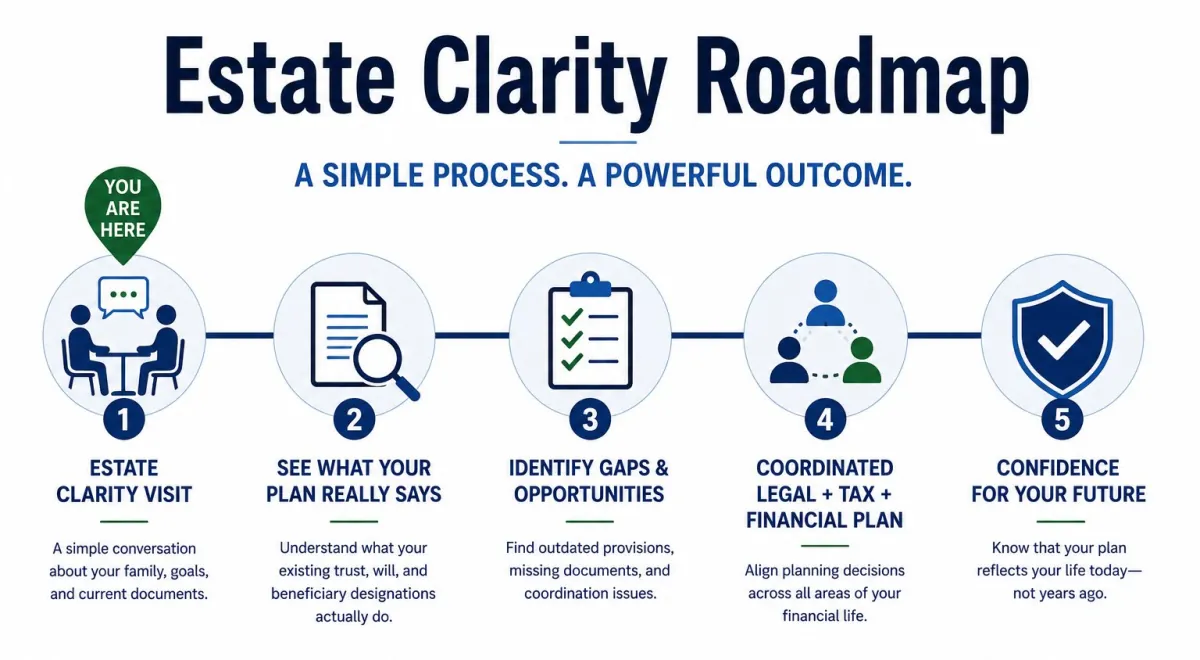
If the answer made you wince a little, that's okay. That wince is useful information. It's also a really good reason to come sit down with us for an Estate Clarity Visit — where step one is just figuring out what your documents actually say right now, before we talk about anything else.
Your plan doesn't have to wear acid-washed jeans forever.
A current plan. A coordinated team. A clear path forward.
That's what Estate Confidence looks like — not a binder you signed once and forgot, but a plan that reflects your life today and a team making sure the legal side and the life side actually work together.
When's the last time you actually looked at your plan?
An Estate Clarity Visit is a short, plain-English conversation. We start by figuring out what your documents actually say right now.
Book an Estate Clarity VisitRich Ison is the founder of Protective Wealth Advisors, where an integrated team of financial, tax, and estate planning professionals helps pre-retirees and retirees coordinate the legal, tax, and income sides of retirement into one plan that actually works together.
This article is educational and is not legal or tax advice. All examples are hypothetical and for illustration only.