Estate Planning · Protective Wealth Advisors
You Don't Have a Trust Yet. Here's What That Actually Means for Your Family.
Not having a plan isn't a character flaw. But it is a decision - you just didn't make it. The state did.
Let's start with the honest part: if you don't have a real estate plan yet, you're in the majority. Most people don't. It's not because you're irresponsible or you don't love your family. It's because estate planning feels like something for “later,” for richer people, for older people - and so it sits on the someday list right next to cleaning out the garage.
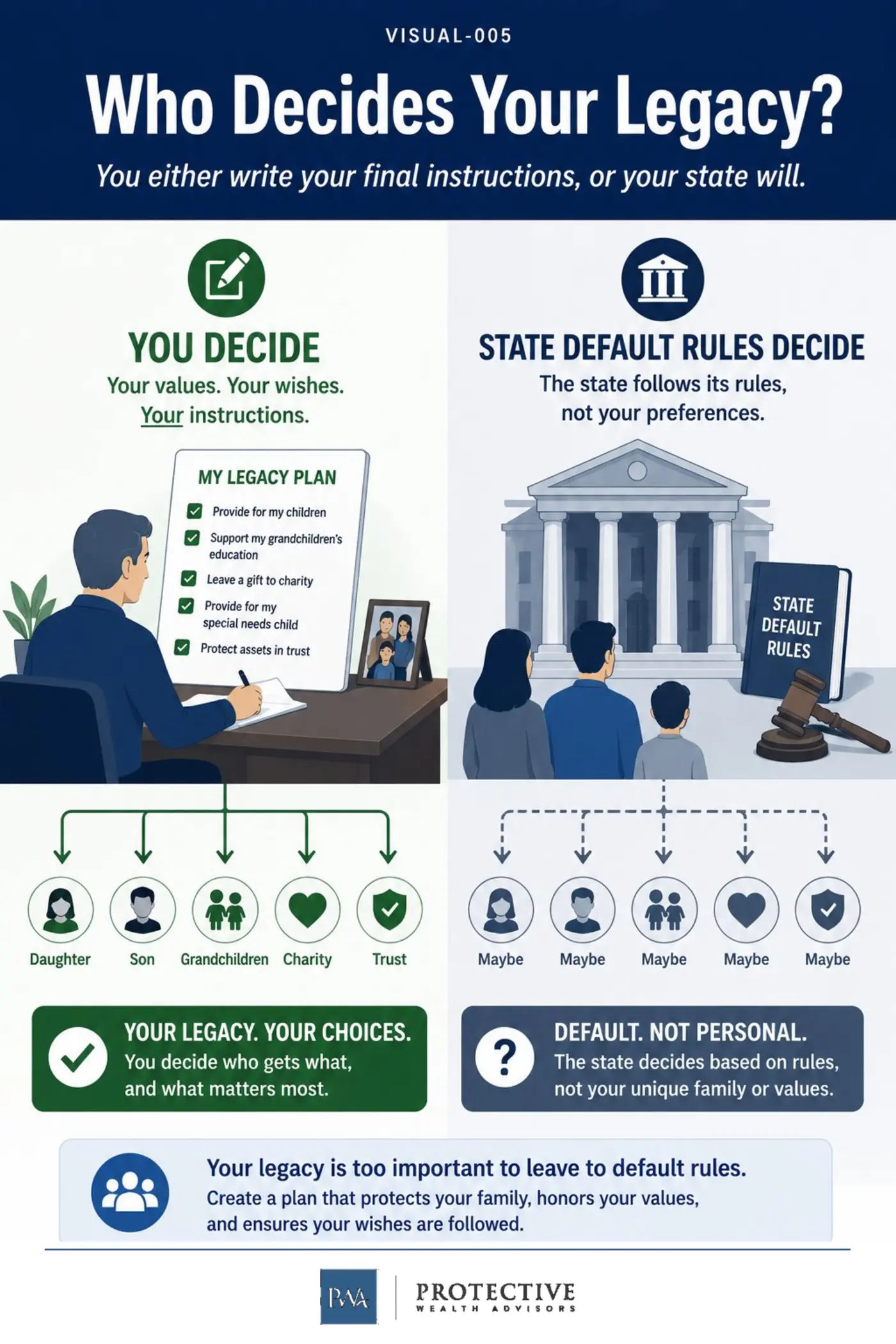
Here's the catch nobody mentions: you already have an estate plan. You just didn't write it. If you have no will and no trust, your state has a plan for you, and it's a one-size-fits-all template that has never met your family. It decides who gets what, in what order, on a timeline set by a courthouse. Most people would not choose the state's plan if they read it. The thing is, almost nobody reads it until it's too late to change.
“I have a will, so I'm covered.” Maybe not the way you think.
A will is a good start - but here's what surprises people: a will is essentially a set of instructions for the probate court. It doesn't avoid probate. It's the document the court reads during probate. So if your whole plan is “I have a will,” your whole plan is “my family goes through the court process, and the will just tells the judge my wishes.”
Probate is the public, court-supervised process of settling your estate. It takes months - sometimes well over a year. It costs money. It's a matter of public record. And it all happens while your family is grieving.
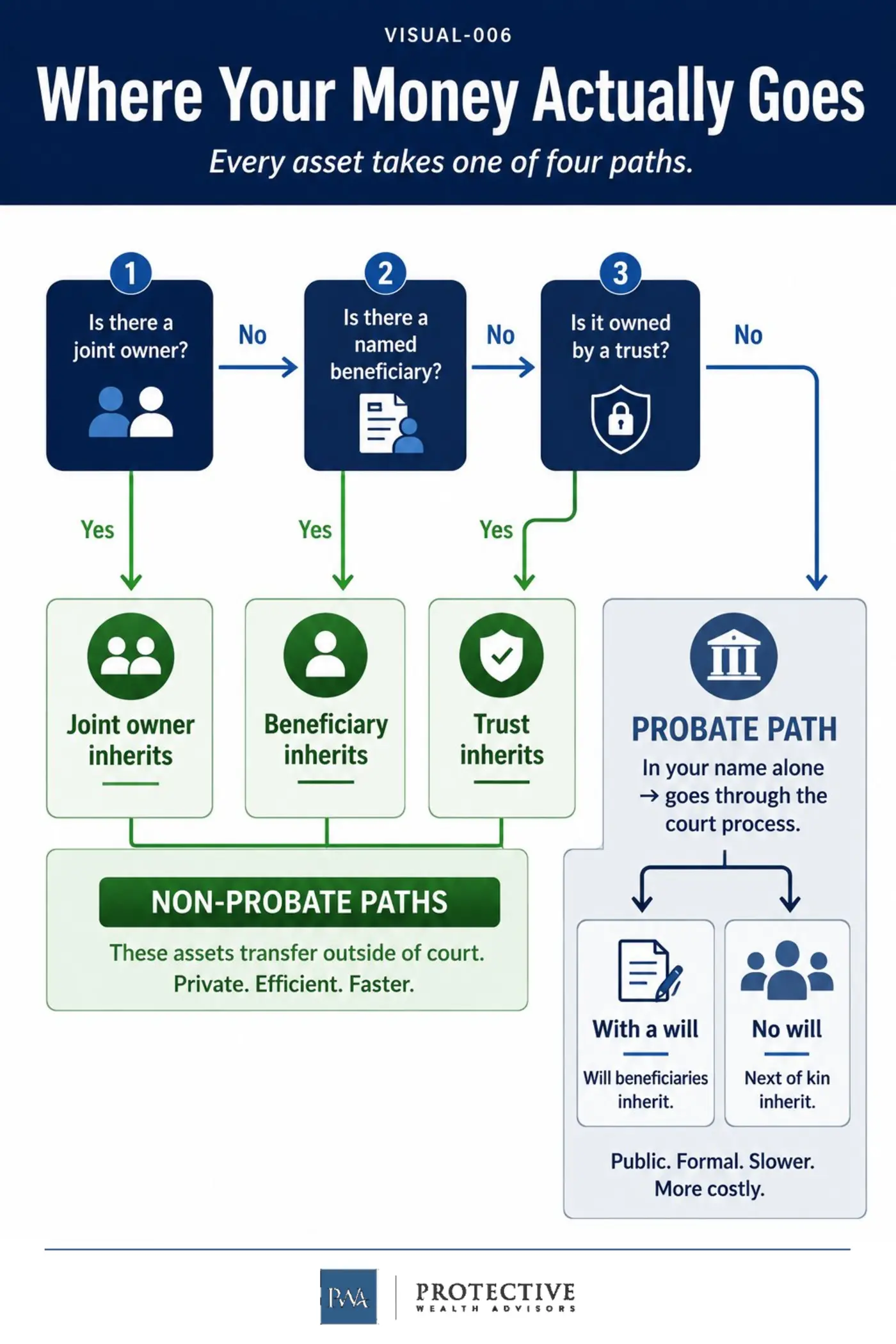
Where your money actually goes - and why a will is only part of it
Here's the part that reframes everything. Most of your assets don't pass through your will at all. They pass by how they're titled and who's named on them. A jointly-owned house goes to the joint owner. A retirement account goes to its named beneficiary. A bank account with a “payable on death” form goes to that person. Your will never touches any of it.
Only the assets in your name alone, with no beneficiary and no joint owner, fall through to the will - and that's the pile that goes through probate. So your plan is really three plans stacked together: titling, beneficiary forms, and the will. If they don't agree, the family gets a mess.
This is the whole reason “do I need a trust?” is the wrong first question. The right question is: when I'm gone, what path does each of my assets take - and do I like where it lands?
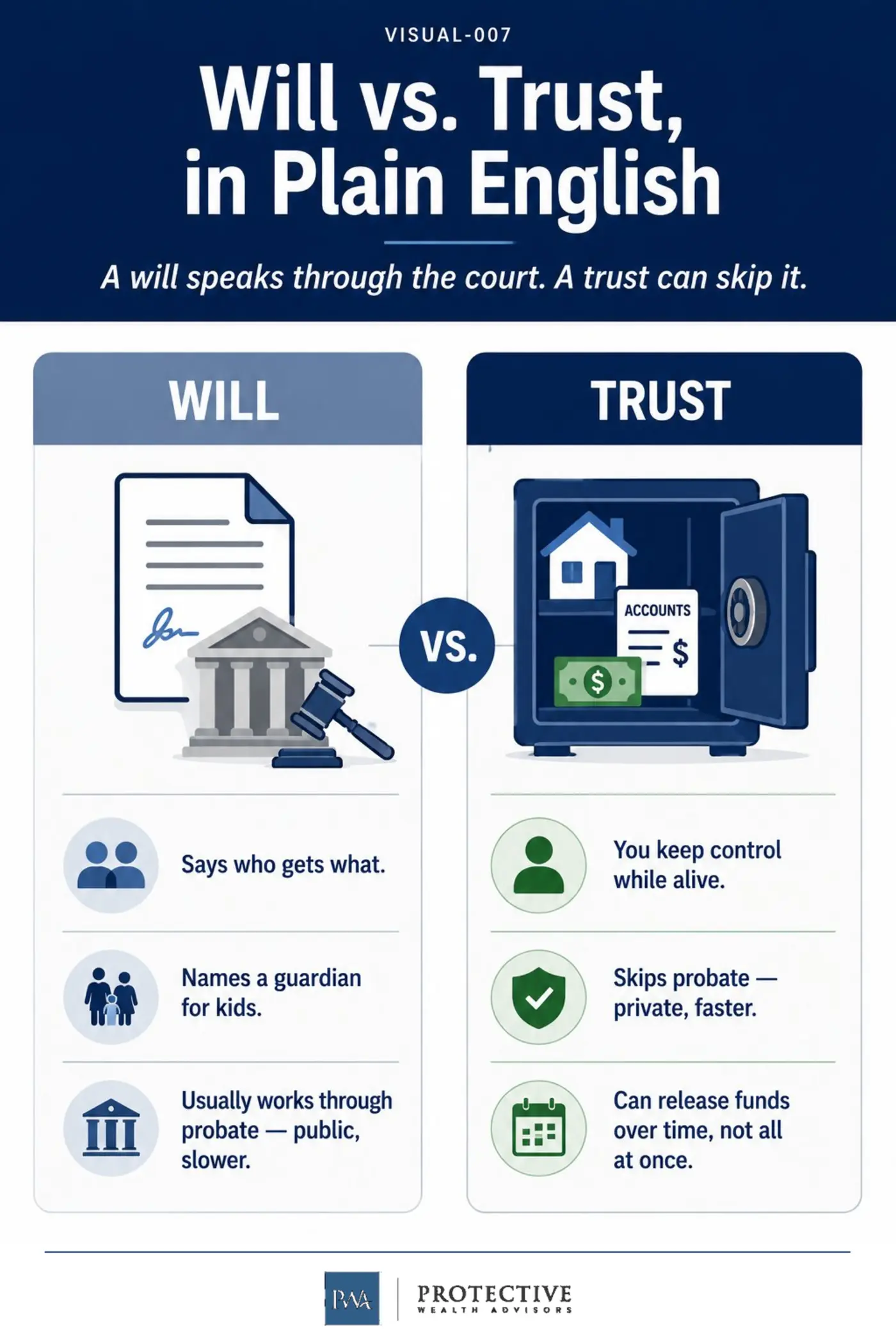
Will vs. trust, in plain English
A will says who gets what, and names a guardian for minor children. On its own, it works through probate, after you're gone. And in a trust-based plan, the will takes on a specific backup role - a pour-over will that sweeps any assets you forgot to put in the trust back into it. Think of it as the safety net under the trust, not the main event.
A trust is more like a container you put your assets into while you're alive. You still control everything; a revocable trust can be changed or undone anytime. But because the trust owns the assets, they can pass to your family without going through probate - privately, faster, and with instructions you set. A trust can also say “give my son his share over time,” not “hand a 25-year-old a lump sum and hope for the best.”
Not everyone needs a trust. But a lot of people who've been told “you're fine with just a will” would feel very differently if they saw what probate actually puts their family through.
And remember - the documents are only half the job.
Even a perfect set of documents only handles the legal side: how you leave it. The bigger half is the life side - how your money is taxed on the way to your family, whether your spouse keeps enough income if you go first, how your retirement accounts avoid becoming a tax bomb. The documents direct whatever's left. The life side decides how much is left to direct.
That's why a real plan isn't a stack of paper you sign once. It's the legal side and the life side, built to work together.
The five core documents most plans should have
- A will, or in a trust-based plan, a pour-over will - names a guardian for minor children and sweeps any stray assets into your trust
- A revocable living trust, if probate avoidance and control matter to you
- A financial power of attorney - so someone can act if you can't
- A healthcare power of attorney - so someone can make medical calls for you
- An advance healthcare directive or living will - your treatment wishes, in writing
Starting from zero isn't behind. It's the best possible position - because nothing's been done wrong yet.
If you've been meaning to “get around to this,” you're not late. You're right on time, because you get to build it correctly from the start instead of patching something stale. The first step isn't signing documents. It's just understanding what would happen to your family today, as things stand - and deciding whether you're okay with that.
Find out what your family would actually face today
An Estate Clarity Visit is a short, plain-English conversation - no documents required, nothing sold. We map what you have, what's missing, and what, if anything, needs to happen next.
Book an Estate Clarity VisitRich Ison is the founder of Protective Wealth Advisors, where an integrated team helps pre-retirees and retirees coordinate the legal, tax, and income sides of retirement into one plan that works together.
This article is general education and is not legal or tax advice. Your situation is unique; please consult a qualified professional before acting. No products are offered or sold through this article.